Why switch to an electric fleet
Electric vehicles (EVs) are a big part of Western Australia’s energy future. As we look to decarbonise our state, EVs will become more commonplace, as will the infrastructure necessary to charge them.
More Australians than ever before own EVs
EVs now account for almost 10% of all new car sales in Australia
Lower impact, lower cost
EVs cost less to run and maintain over their lifetime. While upfront costs might be higher than a petrol vehicle, the overall cost of your vehicle may be lower in the long run.
Drive new visitors with a charging point
Increase the visibility of your business, and region, by adding your charging points to places like Plugshare. If traffic isn’t your goal, enhance your customer experience by allowing your visitors to charge.
Walk the walk
Replacing 10,000 petrol vehicles with 100% electric or hydrogen vehicles is expected to reduce carbon emissions by at least 7,000 tonnes each year. Demonstrate your businesses commitment to sustainability by switching your fleet to electric.
Fuel security
WA relies heavily on international supply of vehicle fuel. By switching over to electric your business can minimise the risk and improve fuel security, relying instead on electricity generated right here in our state.
Share the cost of charging infrastructure
The Charge Up Workplace Grants Program is offering $15 million in grants for businesses to co-fund the cost of EV charging infrastructure.
Powering a change for the better
Increasing model availability, decreasing vehicle cost, and growing awareness of the economic and environmental benefits of EVs are changing the way people think about their transport options. More and more, businesses are enjoying the advantages of electric vehicles.
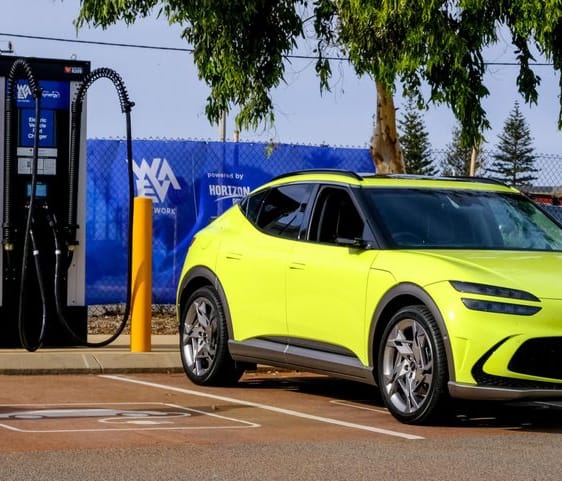
The potential to save is only growing in Western Australia
Currently, there is an upfront cost difference when comparing similar models of EVs and petrol-powered cars that sees the electric model costing more. This is starting to change as we see production scaled to meet customer demand. Electric vehicle sales in Western Australia increased by 142% in the first half of 2023 compared to the same period in 2022. Across Australia electric vehicles accounted for 8.5% of new cars sold in 2023, compared to 0.78% in 2020.* This demand has also seen vehicle availability shortages, so there is a chance that even if you are ready to purchase, you may face varying wait times.
The WA Government is driving a brighter energy future
Here’s how your business can make the most of Western Australia’s push to decarbonise.

The WA government is co-funding the cost of EV charging infrastructure with their $15 million grant program. Charge Up is designed to make it easier and more cost effective for small to medium enterprises, not-for-profit organisations and local government authorities to install EV charging equipment at their workplace.
The current funding round closes 30 June 2025, or when available funding is fully committed.

In a push to assist with the transition to EVs, the State Government announced the Zero Emission Vehicle Rebate Scheme as part of the 'Clean Energy Car Fund'.
The $3,500 electric vehicle rebate is for buyers spending less than $70,000 on a new EV or hydrogen fuel-cell vehicle (FECV).
Save on the lifetime cost of your vehicles
Cheaper to run
Saving on your fuel costs can make a massive difference to your bottom line and EVs can be a much cheaper way to travel. Estimates from a Electric Vehicle Council showed that the fuel cost of travelling 15,000km can be up to 60% cheaper in an EV.
Cheaper to maintain
With less moving parts than a traditional, internal combusition energy, EVs require less maintenance in the long run. You won't have to change oil or replace traditional parts like spark plugs.
Better still, the cost to a replace a battery (if needed) is continually falling each year. Many car manufacturers offer a 10 year or 160,000km warranty on batteries. Read the State of Electric Vehicles report.
Cheaper with solar
If you own rooftop solar and can charge your vehicle during the day, you'll be able to power your EV for free (thanks to the sun).
We're also currently exploring the potential to connect your EV battery to the grid in the future - turning your vehicle into a mini renewable energy resource.
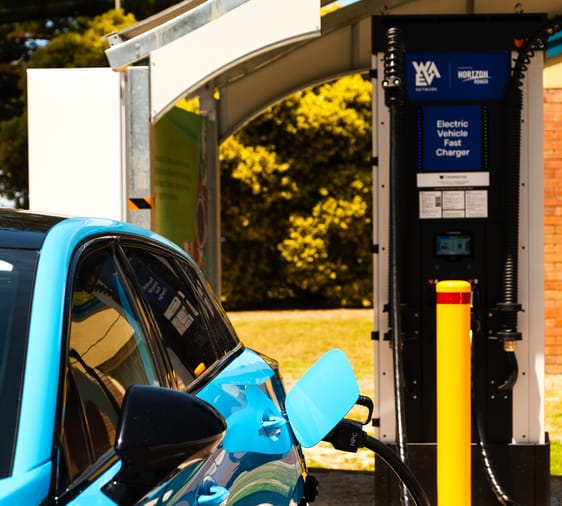
Compare the cost of your fleet with an EV
The Electric Vehicle Council have compiled useful tools and calculators to get a better understanding of the cost to own and maintain an EV compared to your current work vehicles - based on where you live and how often your drive.

We all have a role to play in WA achieving net zero emissions by 2050
The electrification of cars is critical to achieving this. Replacing 10,000 petrol vehicles with 100% electric or hydrogen vehicles is expected to reduce carbon emissions by at least 7,000 tonnes each year.
This is why the State Government has set a target to achieve a minimum 25% EV target for new light and small passenger, and small and medium SUV government fleet vehicles by 2025/26.
Creating a destination charger
Drive traffic (literally) to your door
Installing a charging, and adding it to charger locating maps like PlugShare is a great way to encourage visits from locals and tourists, to charge their vehicles.
Reward visitors with charging benefits
Offering charging facilities for your customers is an excellent value add. Those charging at destinations typically spend half an hour, and up to a few hours parked during the day to explore local sites and attractions.
Frequently asked questions
The considerations are the same as when you are comparing models of petrol cars. When comparing ensure you choose like-for-like models for comparison. Then, consider the total cost of ownership, from upfront purchase to ongoing cost of running your vehicle including refueling and servicing.
The Electric Vehicle Council have compiled useful tools and calculators to help understand the costs of EV ownership.
As part of our EV Orchestration Trial, we're considering the impact that EVs will have on our networks.
This WA first, innovative trial will test two-way charging, also known as bidirectional charging. A technology that allows EVs to not only draw power from the grid but also feed power back into it. Vehicle-to-Grid (V2G) chargers, could turn EVs into mobile energy storage, helping our customers power their homes and reduce their energy bills.
As part of the trial, we will be making sure that the products and services we offer continue to meet the changing needs of the community. Make sure you check our website and follow us on socials for updates.
In a push to assist with the transition to EVs, the State Government announced the Zero Emission Vehicle Rebate Scheme. The $3,500 electric vehicle rebate is for buyers spending less than $70,000 on a new EV or hydrogen fuel-cell vehicle (FECV).
The Zero Emission Vehicle Rebate Scheme forms part of the State Goverment ‘Clean Energy Car Fund’, designed to assist Western Australians to transition away from petrol-fuelled vehicles.
Find out more about the rebate here.

Horizon Power acknowledges the Traditional Custodians throughout Western Australia and their continuing connection to the land, waters and community. We pay our respects to all members of the Aboriginal communities and their cultures; and to Elders past, present and emerging.
Aboriginal and Torres Strait Islander people are advised that this website may contain images, names or voices of deceased people.