Energy saving tips

Easy to implement, low-cost actions your business can take right now to reduce your usage and save on your bill.

How does your business compare?

Heating, cooling, lighting and appliances contribute the most to a typical power bill. Whether you run a cafe, retail shop or small office - you can reduce your energy use in these areas by implementing some fairly inexpensive energy efficiency measures.

Energy Consumers Australia recently surveyed small business owners to find out the types of changes they made to reduce waste and lower their energy costs. See how your business compares below.
Tab content 1

Which of these energy efficient changes have you made?

Select an energy-saving action below to see what other businesses are doing and why these small changes can make a big difference to your energy bill.

44% of businesses

say they adjusted the heating & cooling temperature settings to reduce their energy use.               

Easy to implement

This energy-saving tip is low-cost and easy to implement.


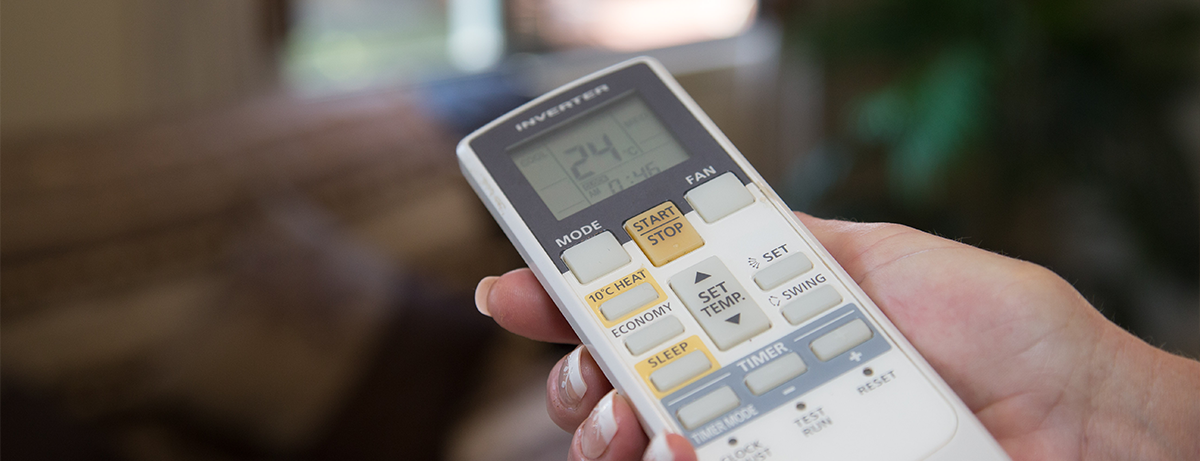
Every 1°C warmer in winter and cooler in summer may increase the running costs of your appliance by up to 10%.

In summer, most people find a temperature between 24°C and 27°C comfortable for cooling. In winter, most people find a temperature between 18°C and 21°C comfortable for heating.

To get the most out of the energy you're using, we recommend:
  • Keep your air-con set at the recommended temperature. You could consider installing programmable thermostats to help manage this.
  • Consider installing fans so your air-con doesn't have to work as hard. The air flow created by a fan can feel like the equivalent of reducing your temperature by around 3°C - but fans use less energy and are cheaper to run.
  • Clean the filter on your air-con regularly to keep it running as efficiently as possible.

21% of businesses

say they blocked the gaps under their doors to reduce their energy use.

Easy to implement

This energy-saving tip is low-cost and easy to implement.


When your heating and cooling system doesn't have to work as hard, you'll get more out of the energy you're using.

Sealing gaps around doors and windows and using draught excluders under doors will reduce energy wastage. You can check for draughts and gaps by:
  • looking for daylight around the edges of doors or windows
  • looking for gaps around skirting boards
  • feeling for draughts with a wet finger 

12% of businesses

say they insulated their premises to reduce their energy use.

Requires some investment

This energy-saving tip requires an initial investment to implement.


Insulation is an important component of a building's overall energy efficiency.

With better insulation, heating, ventilation and cooling systems don't have to work as hard to maintain a desired temperature. This not only reduces energy waste (and lowers your bill), but may also prolong the life of your equipment. Consider having insulation installed in your ceiling, walls and floor if you don’t have it. Most building insulation is measured by an R-value. 

Although there is an initial upfront cost to install insulation, the energy savings you'll make over time will provide a good return on this investment.

16% of businesses

say they installed window coverings on the premises to reduce their energy use.

Requires some investment

This energy-saving tip requires an initial investment to implement.


Window coverings provide an additional layer of insulation, reducing heat transfer through windows. 

This can lower the demand on your heating and cooling system, so you'll use less energy and prolong the life of your equipment.  
  • In summer, close curtains and shade windows facing the sun to minimise heat entering the premises.
  • If you have the option, consider planting bushes or trees outside of windows to provide shade and reduce unwanted heat from entering the building.
  • You can also consider installing reflective screens or transparent low-emissivity coatings to reduce heat transfer. 
Although there is an initial upfront cost to install window coverings, they are a versatile and cost-effective way of improving the energy efficiency of your business premise and reducing your overall heating and cooling costs.

16% of businesses

say they lowered the temperature setting on their hot water system to reduce their energy use.

Easy to implement

This energy-saving tip is low-cost and easy to implement.


If your temperature settings are set higher than you need, you could be losing money.

Consider turning down the hot water temperature to one that is comfortable and appropriate for the job, to save energy.
  • If you have an instantaneous water heater with a temperature controller, many installers automatically set the temperature to 50°C which may be too high for what you need.
  • If you have a storage water heater, the stored water must be kept at a minimum temperature of 60°C. Lower temperatures may allow harmful bacteria (Legionella) to grow, while higher temperatures use more energy.
  • Encourage staff to conserve hot water by using cold water whenever possible. For example, if staff take showers at the site, promote shorter showers to reduce the amount of water and energy needed to heat the water. If it is possible to select the temperature, it should be set between 39°C and 41°C.
Tab content 1

Which of these energy efficient changes have you made?

Select an energy-saving action below to see what other businesses are doing and why these small changes can make a big difference to your energy bill.

47% of businesses

say they installed low energy lightbulbs to reduce their energy use.

Requires some investment

This energy-saving tip requires an initial investment to implement.


LEDs use up to 75% less energy and emit 90% less CO2 than the old halogens.

They also last up to 25 times as long which greatly reduces the need for changing or maintenance. This is especially useful where fittings are difficult to access. LEDs also generate less heat than halogens meaning the load on air conditioning is reduced.

To get the most out of the energy you're using, we recommend:
  • Switch off lights when you don't need them on - get your team involved so everyone is helping to reduce energy waste.
  • Look into installing lighting controls such as motion sensors and timers at your premises.
Visit energy.gov.au for more information.

46% of businesses

say they routinely turn appliances off at the wall when they're not being used to reduce their energy use.

Easy to implement

This energy-saving tip is low-cost and easy to implement.


Avoid paying for standby power when you're not using an appliance or piece of equipment.

Turning equipment off at the wall when it's not being used can make a big difference to your daily energy use.

Here's a few tips to make it a little easier to manage:
  • Set your computers and other devices to hibernate when you’re not using them and power them down at the end of the day.
  • Make it more accessible to turn equipment off at the source. For example, power boards can be used for hard to reach switches, or plug-in timers can be used to switch equipment off at a set time.
  • A smart power board that can turn off slave appliances when the master appliance is turned off can also help turn a number of appliances off at once. For example, the computer can be the master and the monitor, printer and scanner can be the slaves.
  • Get your team involved at your next team meeting to help identify areas where energy can be saved.

28% of businesses

say they bought energy efficient appliances, machinery or equipment to reduce their energy use.

Requires some investment

This energy-saving tip requires an initial investment to implement.


The more energy efficient an appliance or piece of equipment is, the less energy it uses to operate.

While there's a greater upfront cost, newer models and technology may offer more energy saving features (like timers and hibernate modes), further helping to reduce your energy use. 

Remember to look at the energy rating label, if it carries one. The more stars, the better. For more information on energy rating labels visit energyrating.gov.au

5% of businesses

say they talked to their landlord about structural or equipment changes like solar panels to reduce their energy use.

Explore your options

It's easy to do and could help you implement other energy saving measures in the future.


Landlords may be more willing to invest in energy savings measures than you think. 

Especially if they see the potential in long-term savings, increased property value and extended occupancy of tenants. 

Consider having a discussion about whether the property is due for any maintenance or equipment upgrades that are beyond your scope, or an arrangement to install a solar energy system in the future.

7% of businesses

say they applied for a government grant to make changes to their business' energy system to reduce their energy use.

Explore your options

It's easy to do and could help you implement other energy saving measures in the future.


Explore the finance, grants and support available to small businesses. 

You may be eligible to apply for grants for commercial and industrial investment in energy efficiency measures. There are also government incentives available for electrification projects and finance options for small businesses wanting to improve energy efficiency and reduce emissions.

Don't know where to start? Browse our resource library.

Where to next?

We recognise the Government of South Australia's Energy Advisory Service's generosity in permitting Horizon Power to utilise their DIY Business Energy Audit publication as a foundation for our tool. * Visit Energy Consumers Australia (2023) SME Energy Consumer Information Research for more information.

Horizon Power acknowledges the Traditional Custodians throughout Western Australia and their continuing connection to the land, waters and community. We pay our respects to all members of the Aboriginal communities and their cultures; and to Elders past, present and emerging.

Aboriginal and Torres Strait Islander people are advised that this website may contain images, names or voices of deceased people.