
Working near electrical infrastructure ?
Don't start work near a powerline, mini pillar or other electrical infrastructure until you have express permission from our Horizon Power team.
We will let you know about the applicable voltages, risks and any other details such other forms which may need to be submitted and processed before work can start.
Know the danger zone and other risks
Find information about danger zones, clearances and other considerations for underground and overhead electrical infrastructure.It’s important to understand and comply with these obligations to avoid the risk of penalties, damage to equipment and property, injury to yourself and others, or even death.
Remember, don’t start work near electrical infrastructure without permission from us, and always follow your industry's regulations, codes of practice and guidelines related to safe work.
Danger zones
Working around electricity, whether underground or overhead, is high risk work.
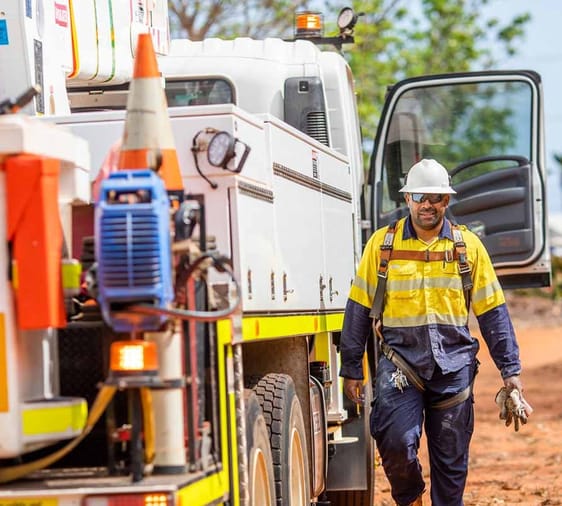
A danger zone is a specific area surrounding live electrical apparatus (including our Horizon Power network) where no person, equipment or materials can enter. The size of the danger zone is determined by the voltage of the electrical apparatus.
If you are in charge of the work area, it's your responsibility to plan all work to be carried out safely outside of the danger zone, and that nothing (or no person) enters it.
Please note, if your works enter the danger zone as prescribed in section 3.64 of the Occupational Safety and Health Regulations 1996, or you make contact with the network, you may be prosecuted and be liable for any damage to the network.
Minimum approach distances for underground cables
To help you avoid danger zones, we have identified the minimum approach distances around both underground and overhead assets. These danger zones include minimum approach distances for:
- Power tools or plants
- Non-powered hand tool/non-destructive digging (or potholing) - This refers to the use of high pressure compressed air to break up the ground, which is then removed by a powerful vacuum unit.
|
Nominal voltage |
Minimum approach distance |
|
|
Power tool or plant |
Non-powered hand tool/non-destructive digging |
|
|
Up to and including 1,000V (low voltage) |
30cm |
Approach with care, avoid contact |
|
1,000V up to and including 33kV (high voltage) |
50cm |
|
|
Greater than 33kV up to and including 330kV (transmission) |
3m* |
|
* Please note: Horizon Power must assess any works within 3 metres of cables 33kV and above. You may need a permit and/or authorisations for your works.
Safety around underground power
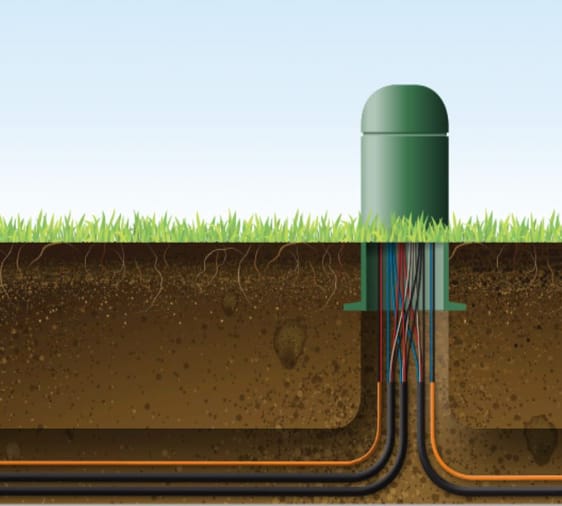
Excavating, drilling and installing posts and poles can be life-threatening if you don't know what is below the surface.
Electricity and other essential services are often provided through underground networks. Coming into contact with our network assets is very dangerous - and it can leave entire communities without essential services.
No matter the size of your project, you always need to be aware of these assets and the risks they pose. It is your responsibility to ensure the proposed work can be carried out safely. You can request information to assess risk and work safely.
Industry Standards
When working near underground assets, it is essential to follow the five Ps of excavation:
Guidelines for undertaking excavation work
- Contact Dial Before You Dig for a cable location plan
Dial Before You Dig is a free national service which aims to help prevent danger, damage and disruption to Australia’s complex pipe and cable networks. Accidentally hitting these cables can cause a lot of damage and serious injury or even death. Visit 1100.com.au or call 1100 to submit an enquiry for plans detailing the location and voltages of network assets in your work area. - Engage a qualified cable locating service provider
This will help confirm the location of known and unknown underground services in your work area. Dial Before You Dig provide a list of certified locators. - Follow the industry standards process (link to further down page)
- Determine and double-check the minimum approach distances
You may need to refer to your industry's regulations, codes of practice and guidelines for details. - Determine the collapsible area of the proposed excavation
Ground collapse is one of the biggest risks to be controlled in excavation work. It can occur quickly and without warning, giving you or members of your team virtually no time to escape. When planning your work, always consider the collapsible areas for underground assets. Choose appropriate excavation methods and control measures for your working environment.
- Consider the operating height of any excavation equipment
Many vehicles and pieces of equipment needed for digging can extend into the overhead powerline danger zones. Check your overhead Dial Before You Dig plans for the location and voltages of our powerlines to determine the clearances required. - Only use mechanical excavation after all services have been identified and exposed
You need to prove the location of service assets in your work area before erecting barriers and creating allowances to maintain the appropriate clearances. - Get advice from WorkSafe's Excavation Code of Practice 2013
Stop work immediately and call us on 13 23 51 if you cannot locate assets on the plans or if you discover damaged insulation or cables, or if you discover a cable that is not shown on your plans.
Safety around overhead power
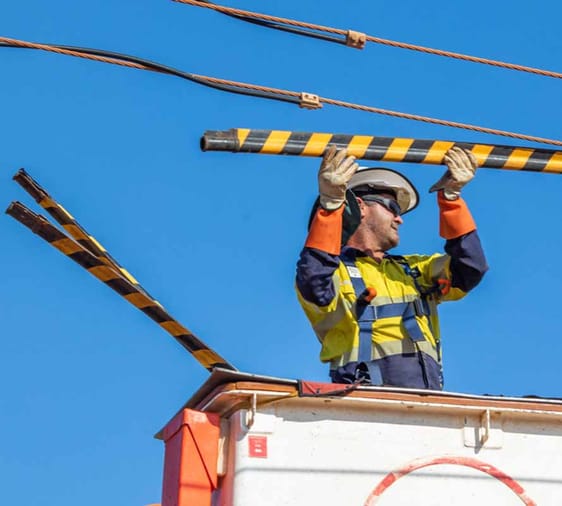
It’s vital to plan ahead to make sure you and your team are safe when working near the overhead network.
To limit the risk of accident and injury, you should always follow the guidelines above related to any excavation work and:
- Know the location and voltages of network assets in your work area to determine the required clearances.
- Check the height of loads.
- Work out the extension, reach and height of equipment you plan to use.
- Never lift loads directly underneath powerlines - or over powerlines.
- Establish your lay down area or site storage away from any of our network assets
- Any sand, bins or other equipment or materials - and people - should always stay outside of the danger zones.
Know the voltage and location of distribution assets
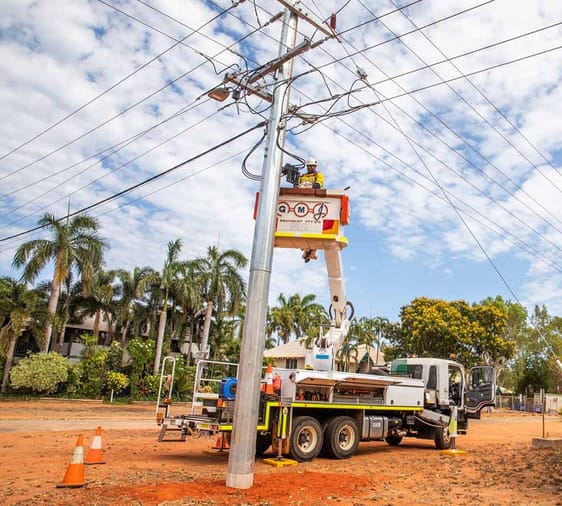
Our distribution assets include:
- The low voltage network (415 to 1,000 volts)
- Parts of the high voltage network (up to 33,000 volts or 33kV)
To determine the voltage of overhead and underground assets in your work area, lodge a Dial Before You Dig enquiry. Submit your request at least 30 days before you need to start work, or longer if you think any assets might need to be removed or relocated.
Easements
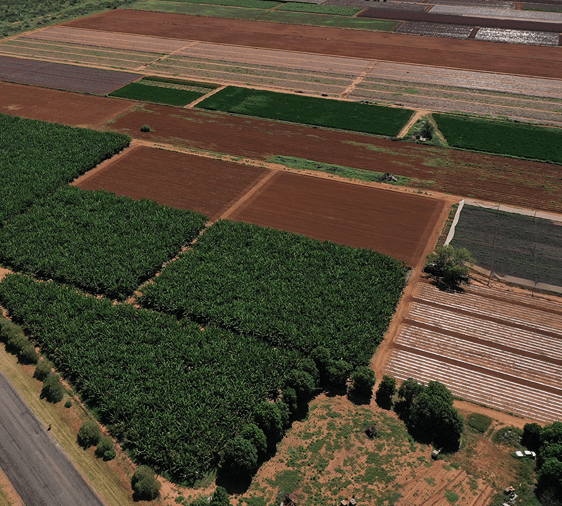
Our electricity network is the largest in Australia, with some powerlines and structures located on or near private property, particularly across our rural and remote areas.
In some areas, an easement may be registered on the Certificate of Title of a property. An easement (sometimes called a ‘wayleave’) allows us and our contractors access to build and maintain electrical infrastructure on private property.
In some areas, an easement may be registered on the Certificate of Title of a property. An easement (sometimes called a ‘wayleave’) allows us and our contractors access to build and maintain electrical infrastructure on private property.
For your safety, this could include restrictions on:
- Changing or disturbing the present ground level
- Constructing or erecting any building or structure
- Construction of fencing higher than 2 metres
- Constructing, erecting, improving, enlarging or altering any storm water drain, basin or dam
- Growing, cultivating or maintaining any vegetation higher than 1 metre
- Stacking or storing any material or rubbish
- Using machinery or vehicles which are higher than 4.5m
- Parking any vehicle or machinery which is higher than 2.5m
For your safety, your activities may be limited if there is a clearance zone on your property. These zones are applied to electrical infrastructure where there is not a registered easement - and the restrictions are the same. You need to know:
- The distance of a clearance zone is defined by the Australian Standard for overhead line design (AS/NZS 7000:2010).
- We don’t support any kind of development within the clearance zone of an overhead powerline unless the area has been assessed and approved properly and in line with relevant standards and procedures. Any building also needs to meet the danger zone requirements prescribed in section 3.64 of the Occupational Safety and Health Regulations 1996.
- You can request our help to calculate the clearance zone. This involves an engineering assessment (which we can complete) and a survey, which you can arrange through a licensed surveyor.
Workplace health and safety regulation obligations
Always follow your industry's regulations, codes of practice, and guidelines related to safe work. You also need to know:
- It’s mandatory for you, as a customer, excavator, or contractor, to physically locate all services before any excavation works, as set out in Work Health and Safety Act 2020 (WA)
- You should never assume the depth, location, or alignment of cables. Use Dial Before You Dig plans as a guide only.
- When undertaking any works, it is your responsibility as a customer, excavator, or contractor to make sure that all due care and safe clearances are observed and maintained. Check the Utility Providers Code of Practice for Western Australia for works in road and rail reserves.
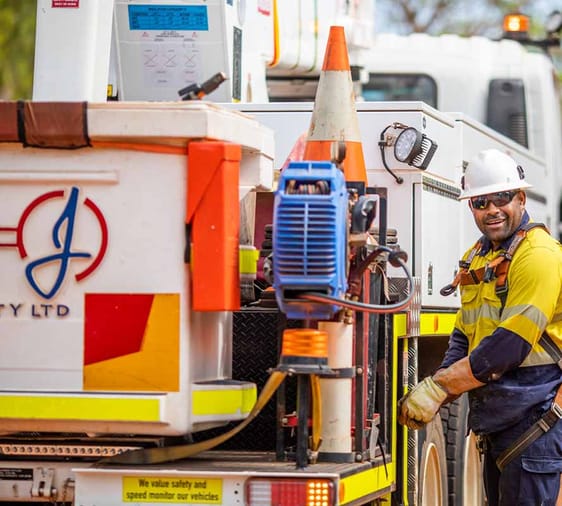
All of our contractors and employees need to complete our free online safety induction training course in accordance with the OSH-3.2-5-2-1 Safety Induction Requirements.
More ways to stay safe

When you see a fallen powerline, the best way to help is to call Horizon Power immediately on 13 23 51.

Keep up-to-date with details of planned power outages, faults and electricity supply interruptions when they occur.
Report an emergency
To report an emergency or outage, please call us on 13 23 51.
In a life-threatening emergency, call 000 and stay at least 10 metres away from fallen power lines.
Horizon Power acknowledges the Traditional Custodians throughout Western Australia and their continuing connection to the land, waters and community. We pay our respects to all members of the Aboriginal communities and their cultures; and to Elders past, present and emerging.
Aboriginal and Torres Strait Islander people are advised that this website may contain images, names or voices of deceased people.